What is Dam?
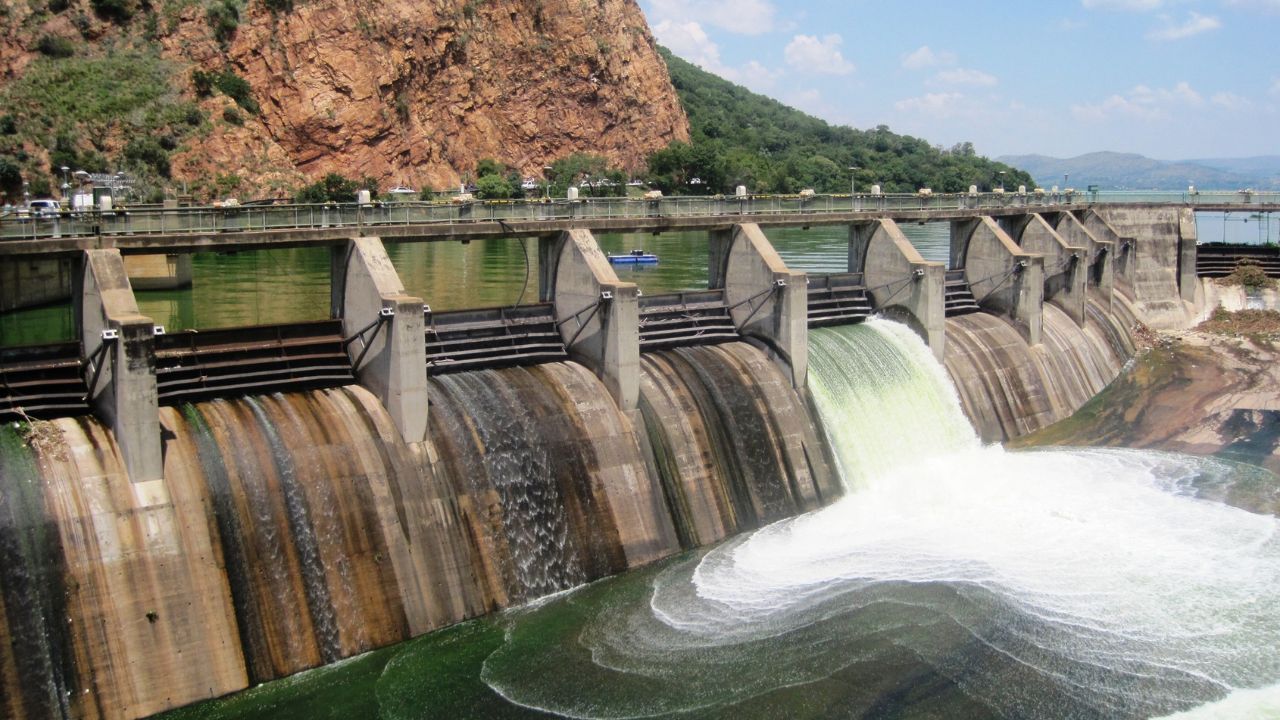
A dam is a barrier built across a river, stream, or waterway to control the flow of water.
Accurately calculating the volume and water storage capacity of a dam is essential for water management, agriculture, or engineering projects. The Dam Capacity Calculator simplifies this process by allowing users to input key dam and reservoir dimensions and instantly receive precise results.
Key Formulas for Dam Capacity Calculation
1. Total Dam Volume
The total dam volume (V) is calculated as:
Total dam volume=Dam length×Dam width×Dam height
Example Calculation for Dam Volume
Input Values:
- Dam Length (L) = 50 m
- Dam Width (W) = 30 m
- Dam Height (H) = 20 m
Using the formula:
V=L×W×H=50×30×20=30,000m3
2. Reservoir Capacity
The reservoir capacity (C) is calculated using the formula:
Reservoir capacity=Reservoir area×Reservoir depth
Example Calculation for Reservoir Capacity
Input Values:
- Reservoir Area (A) = 2000 m²
- Reservoir Depth (D) = 10 m
Using the formula:
C=2000×10=20,000m3
3. Water Storage Capacity
The water storage capacity (W) in liters is derived by converting the reservoir capacity from cubic meters:
W=C×1000
Where:
- W = Water storage capacity (in liters or gallons)
- C = Reservoir capacity (in cubic meters)
- 1m3=1000liters
Example Calculation for Water Storage Capacity
Input Values:
- Reservoir Capacity (C) = 20,000 m³
Using the formula:
W=C×1000=20,000×1000=20,000,000liters
Benefits of the Dam Capacity Calculator
- Accurate Estimates: Simplifies complex calculations for dam and reservoir capacity.
- Versatile Use: Suitable for both cubic meters (metric) and cubic feet (imperial).
- Time-Saving: Automatically performs conversions, ensuring precise results.
- Resource Management: Ideal for engineers, environmentalists, and agricultural planners.
Frequently Asked Questions
1. What is the difference between dam volume and water storage capacity?
Dam volume refers to the volume occupied by the dam structure itself. Water storage capacity refers to the volume of water held in the reservoir behind it. These are separate measurements.
2. Should I enter average depth or maximum depth?
If the calculator estimates water volume by multiplying reservoir surface area by depth, use the average water depth. Using the deepest point can overestimate capacity when the reservoir has an uneven bottom or sloping sides.
3. Can this calculator accurately measure an irregular reservoir?
A basic area-and-depth calculation provides an estimate. More detailed capacity measurements require information about the reservoir’s underwater shape and water level. Bathymetric surveys map the reservoir bottom to calculate storage at different elevations. USGS reservoir capacity guidance
4. Is dam height the same as reservoir depth?
No. Dam height measures the structure, while reservoir depth measures the water from its surface to the bottom. Do not substitute the dam’s height for the reservoir’s average water depth.
5. Does sediment affect water storage capacity?
Yes. Sediment occupies space that could otherwise hold water, reducing storage capacity over time. Updated depth measurements or surveys can help reflect these changes. USGS sedimentation study
6. Is the calculated capacity the amount of usable water?
Not necessarily. The total stored volume may include water below the outlet or minimum operating level. Usable storage depends on the reservoir’s operating limits and outlet arrangement.
7. Can I use the result to design a dam?
The calculator provides a preliminary volume estimate, not a structural or hydraulic design. It does not determine dam stability, spillway capacity, or a safe operating water level.
Check out 8 Similar Calculators: