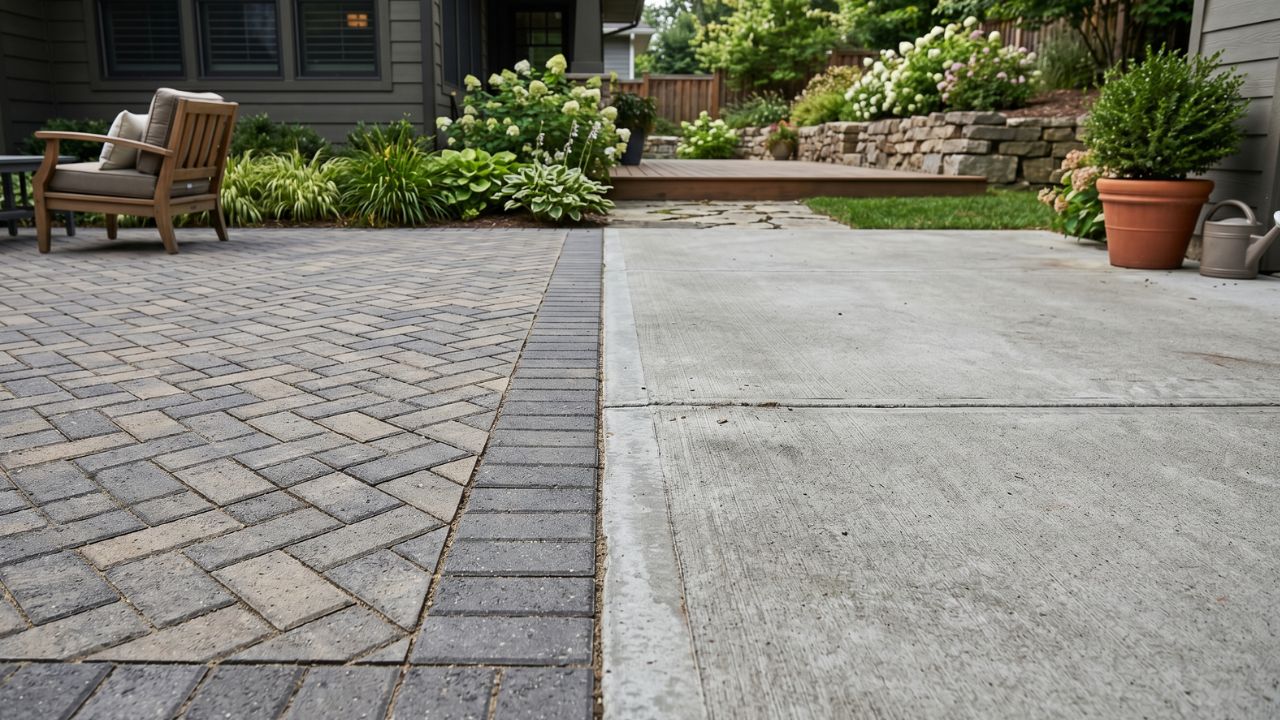
Comparing upfront costs, long-term value, and what actually saves you money
If you're planning a new driveway, patio, or walkway, one of the first questions you'll face is: pavers or concrete? Both are durable, popular options — but they differ significantly in cost, maintenance, and lifespan. Let's break it down so you can make the smartest decision for your budget.
The short answer
Concrete is almost always cheaper upfront. Poured concrete typically costs $6–$12 per square foot, while concrete or clay pavers run $10–$25 per square foot installed. That gap can add up fast on a large project.
But — and it's a big but — pavers often win on long-term value. Their repairability, aesthetics, and lifespan can make them the more cost-effective choice over 20–30 years.
Cost comparison at a glance
| Factor | Concrete | Pavers |
|---|---|---|
| Installed cost (per sq ft) | $6 – $12 | $10 – $25 |
| 500 sq ft project estimate | $3,000 – $6,000 | $5,000 – $12,500 |
| Repair cost (cracked section) | $300 – $1,000+ | $50 – $300 |
| Lifespan | 25 – 30 years | 30 – 50+ years |
| Reseal / maintenance | Every 3–5 years | Every 3–5 years |
Why concrete is cheaper to install
Poured concrete is a faster, simpler process. A crew pours and finishes the slab in one visit, and labour costs are lower because there's no individual unit to place and level. The materials themselves — cement, aggregate, water — are commodity items that are widely available.
- Lower labour hours means lower labour cost
- No grading and compacting of a sand/gravel base (or minimal)
- Faster curing means less time before the surface is usable
- Widely available contractors in most markets
Why pavers cost more upfront
Pavers require significantly more prep work. A proper paver installation involves excavating to depth, laying a compacted gravel base, a sand setting bed, and then placing each unit individually — all before any cutting or edge finishing begins.
- Labour-intensive unit-by-unit placement
- Deeper base preparation (typically 6–8 inches)
- More materials: base aggregate, bedding sand, joint sand, edge restraints
- Specialty cuts required at borders and curves
Where pavers save you money long-term
Here's where the calculation flips. Concrete cracks — it's not a question of if, but when. Tree roots, ground movement, freeze-thaw cycles, and heavy loads all take their toll. Repairing a cracked concrete slab often means jackhammering out a section and repourinig it, which can cost hundreds to over a thousand dollars per repair.
Pavers, by contrast, can be lifted individually, the base issue fixed, and the pavers reset or replaced. A typical paver repair costs a fraction of a comparable concrete repair.
"A paver driveway that lasts 40 years with two minor repairs may end up costing less in total than a concrete driveway replaced after 25 years."
Additional long-term advantages of pavers:
- No visible cracking — individual units flex with ground movement
- Easier utility access — pavers can be lifted for plumbing or irrigation work with no saw-cutting
- Higher resale appeal — pavers consistently rank higher in curb appeal surveys
- Permeable options available — permeable pavers can reduce stormwater runoff and may qualify for local rebates
Project type matters
The "right" answer often depends on what you're building:
Driveways
Concrete is a strong value pick for driveways where budget is the priority. However, pavers handle heavy vehicle loads very well and are far easier to repair if one section sinks or cracks.
Patios
Pavers tend to win here. The design flexibility, the warmth of natural stone or clay, and the ability to easily expand or modify the patio later all make them the preferred choice for outdoor living areas.
Walkways
Either works well. For a front walkway where aesthetics matter, pavers often justify the extra cost. For a functional side path, brushed concrete is a perfectly sensible choice.
Hidden costs to watch for
Watch out for these often-overlooked costs:
- Concrete sealing — recommended every 3–5 years to prevent staining and surface damage
- Paver joint sand topping up — needed occasionally, especially after heavy rain or weed growth
- Base failure — poor-quality base prep on either surface leads to expensive repairs down the line. Always hire an experienced installer.
- Permits — some municipalities require a permit for driveways or large hardscape areas regardless of material
So which should you choose?
Here's a simple rule of thumb:
- Choose concrete if you have a tight upfront budget, need a large surface area covered quickly, or are doing a utilitarian project like a utility pad or side walkway.
- Choose pavers if you're building a patio or front driveway where aesthetics and long-term value matter, if you're in a freeze-thaw climate where cracking is common, or if you want a surface that will outlast the house.
Whatever you choose, the quality of the installation matters more than the material. A well-installed concrete slab beats a poorly installed paver job every time. Get at least three quotes, ask for references, and make sure whoever you hire compacts that base properly.
Final verdict
Concrete is cheaper to install. Pavers can be cheaper to own. The best choice depends on your project type, your climate, and how long you plan to stay in your home. If you're staying long-term and care about the look and feel of your outdoor space, pavers are almost always worth the premium.