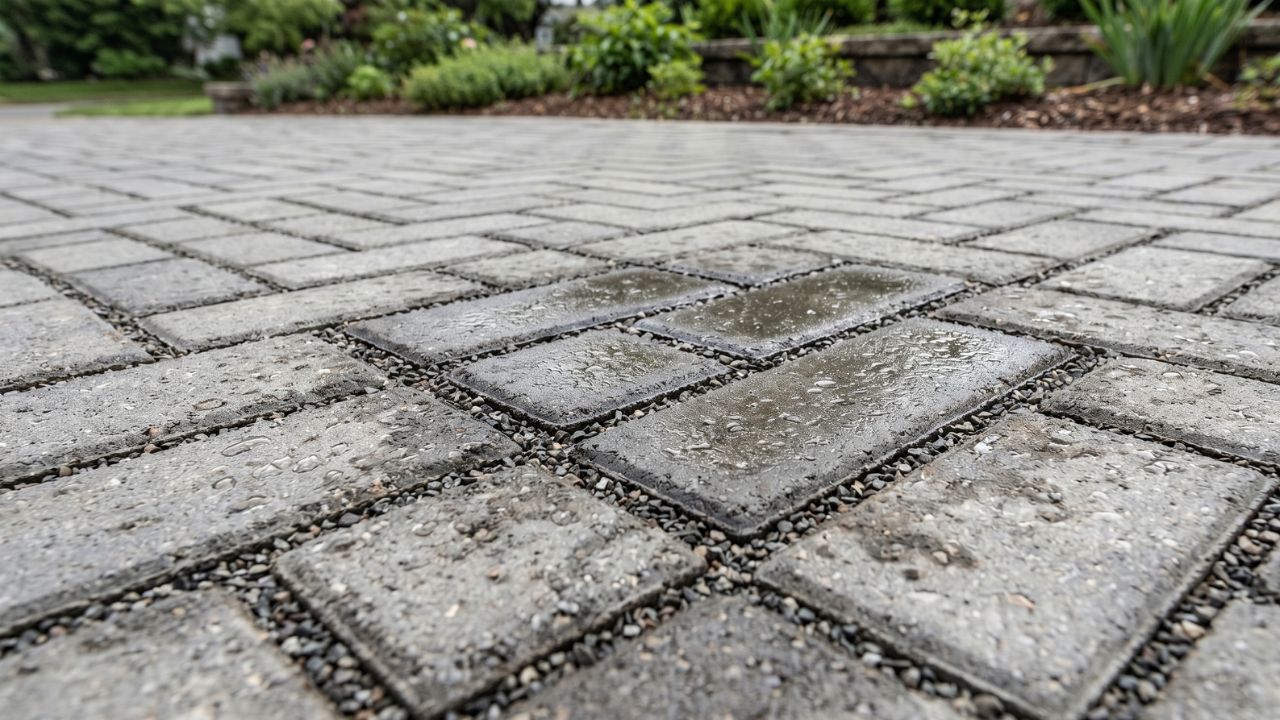
When rain falls on a conventional driveway or parking lot, it has nowhere to go but away — rushing across hard surfaces, picking up pollutants, and eventually flooding drains and streams. Permeable pavers offer a quiet but radical alternative: surfaces that let water sink right back into the earth.
Permeable pavers (also called pervious or porous pavers) are specially designed paving units that allow rainwater and snowmelt to pass through the surface and filter down into the ground below. Unlike traditional concrete or asphalt, these pavers work with nature rather than against it.
"A permeable surface isn't just a pavement — it's a slow-release water system built into the ground itself."
How Do They Work?
Beneath permeable pavers lies a carefully engineered layer system. Water enters through gaps, holes, or a porous material in the pavers themselves, then passes through a layer of gravel or crushed stone that temporarily stores the water. From there, it slowly percolates into the native soil underneath, mimicking the natural water cycle that existed before paving covered the land.
This layered construction filters out sediment, heavy metals, and other pollutants as water moves downward — acting as a passive treatment system for stormwater.
Types of Permeable Pavers
Not all permeable pavers are alike. Each type suits different applications, budgets, and aesthetics.
1. Concrete Grid Pavers
Rigid concrete units with open cells filled with gravel or grass. Strong and durable — common in driveways and car parks.
2. Interlocking Concrete Pavers
Traditional-looking pavers with gaps between units. Versatile, widely available, and easy to repair or replace individually.
3. Porous Asphalt & Porous Concrete
Continuous surfaces made with a high void content. They look conventional but let water drain freely through the material itself.
4. Gravel-Filled Plastic Grids
Lightweight honeycomb grids that stabilise gravel or grass while allowing full drainage. Great for occasional-use paths and overflow parking areas.
Key Benefits
- Reduces urban flooding by absorbing runoff at the source rather than channelling it into drains.
- Lowers the urban heat island effect — permeable surfaces can run 30–40°F cooler than traditional asphalt.
- Filters pollutants naturally as water percolates through gravel and soil layers.
- Recharges local groundwater and aquifers, supporting ecosystems and drinking water reserves.
- Reduces ice formation in colder climates by allowing water to drain before it freezes.
- Lowers stormwater management costs over the long term for homeowners and municipalities alike.
By the Numbers
- Up to 90% of stormwater can be absorbed, compared to near 0% on conventional concrete.
- 30–40°F cooler surface temperature versus traditional asphalt in summer.
- Up to 50 years of lifespan with proper installation and maintenance.
Where Are They Used?
Permeable pavers have found their place in a surprisingly wide range of settings. Residential driveways and patios account for a growing share of installations as homeowners become more sustainability-conscious. Municipalities use them in car parks, footpaths, and public plazas. Commercial developments in flood-prone areas often install them to meet environmental regulations and reduce drainage infrastructure costs.
They work particularly well in low-to-medium traffic areas, though engineered versions of porous asphalt can handle heavier loads in industrial settings.
In many cities across Europe, North America, and increasingly in India, permeable paving is now listed as a preferred "green infrastructure" solution in urban planning guidelines.
Things to Consider Before Installing
Permeable pavers are not maintenance-free. Sediment can clog the pores over time, so periodic vacuuming or pressure washing is needed to maintain drainage performance. Soil type matters too — clay-heavy soils drain slowly and may reduce effectiveness unless a dedicated drainage layer is added beneath.
Cost is typically higher upfront than conventional paving, though reduced drainage infrastructure and potential rebates from water utilities can offset this over the long term. In cold climates, salt use for de-icing should be minimised, as it can harm the filter media and surrounding vegetation.
Are They Right for You?
If your property deals with surface flooding, you want to reduce your environmental footprint, or you live in a region with water scarcity, permeable pavers are worth serious consideration. They are not a universal solution — but for the right site, they transform a passive hard surface into an active piece of ecological infrastructure.
The best place to start is a soil permeability test and a conversation with a landscape engineer who can assess whether the ground beneath will work with the system, not against it.
The Bottom Line
Permeable pavers bridge the gap between built environments and natural water cycles. As cities grow denser and rainfall patterns grow less predictable, surfaces that absorb rather than repel water may well become the default — not the exception.